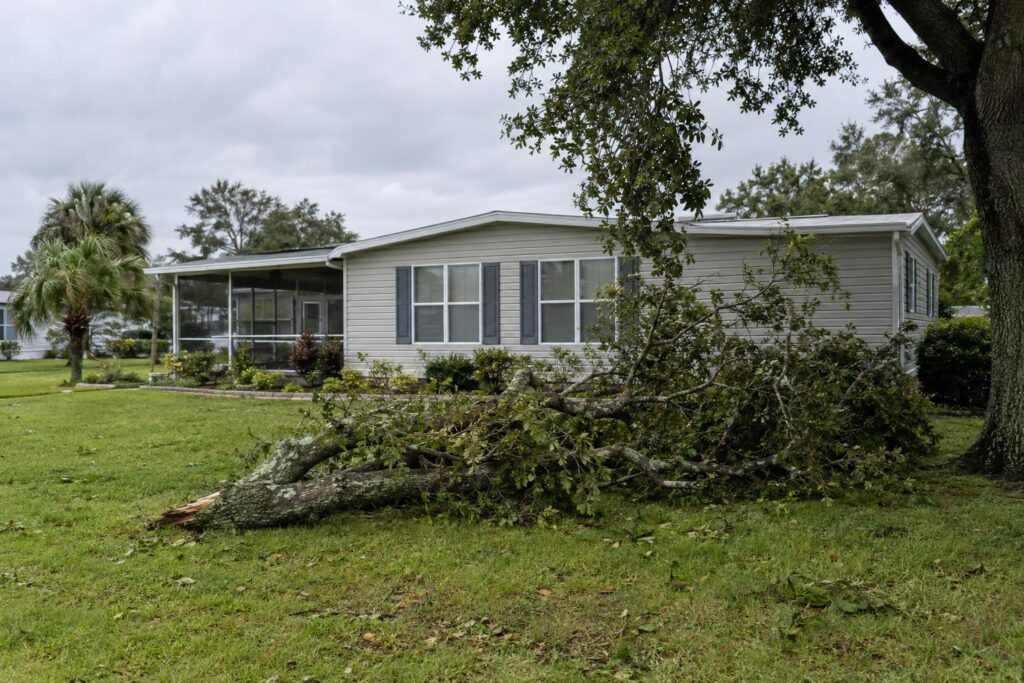
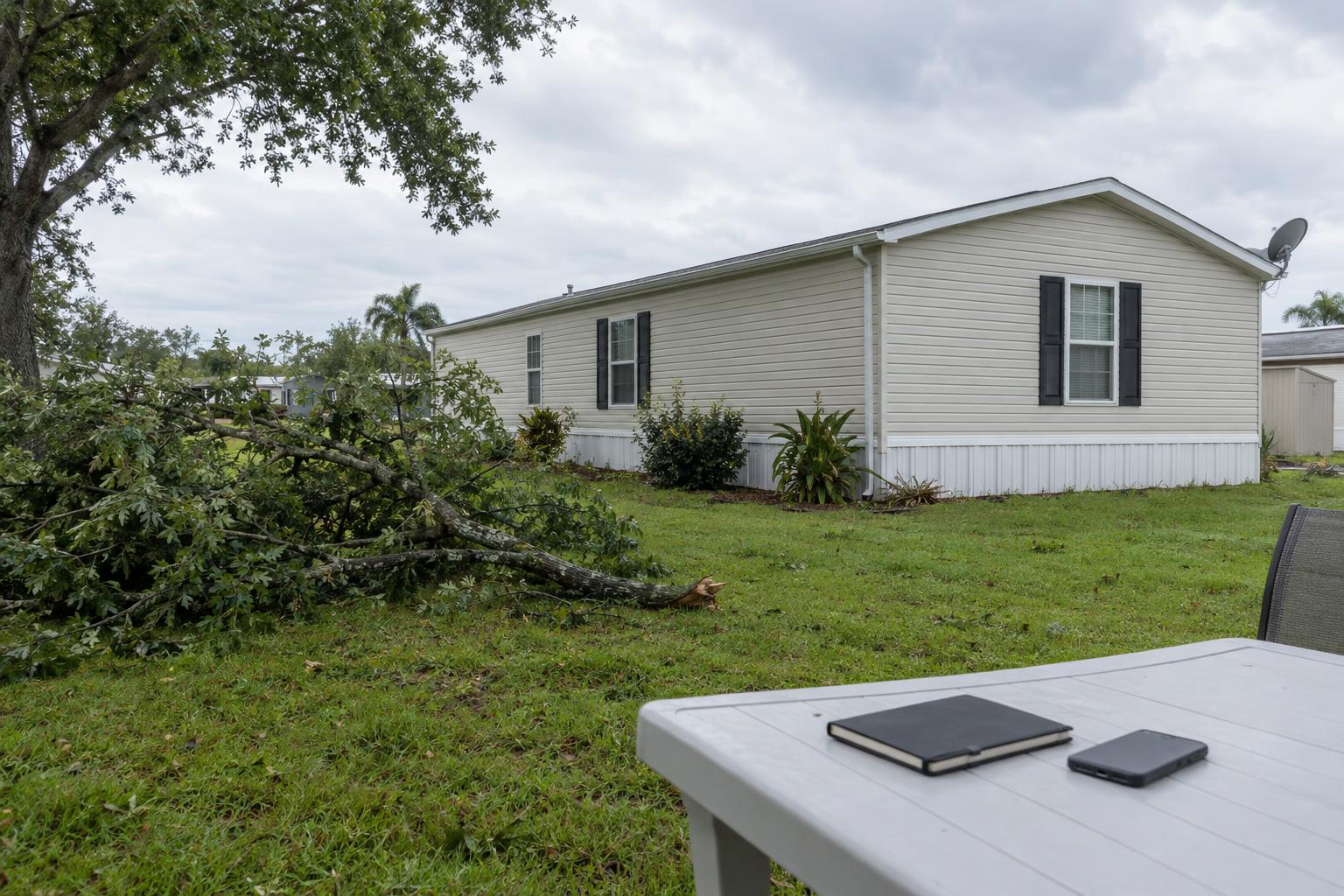
A fallen tree can leave a Florida mobile or manufactured home with a damaged roof, siding, windows, awning, or service line. Owners comparing coverage can start with Bassine’s mobile home insurance overview, then check the policy issued for their home. Whether mobile home insurance pays for the damage depends on the policy, the cause of the fall, the property involved, the applicable deductible, and the insurer’s investigation. A tree landing on a home is not an automatic yes or no. The safest first step is to protect people from immediate hazards, document what happened from a safe distance, and ask the insurer how the policy applies.
This guide explains the questions Florida owners can check after a tree falls. It does not interpret a specific contract. For an overview of how homeowners coverage is organized, the Florida Department of Financial Services homeowners insurance overview is useful background, but a mobile-home policy may use different forms, limits, exclusions, and endorsements. The declarations page and full policy wording are the controlling documents for a particular claim.
Start with the cause of the tree fall
Insurers generally look at the event that caused the loss and the wording of the insured property’s policy. A tree may fall during a windstorm, after lightning, because soil becomes saturated, or because a trunk or major limb was already decayed. The timing and physical evidence can help explain the event, but a homeowner should not decide coverage from the weather alone.
Wind-related losses may be subject to policy conditions or a separate windstorm or hurricane deductible. A tree that falls without a covered storm cause can be treated differently under a particular contract. Some policies exclude or limit certain causes of loss, and an endorsement can change the base form. Ask the insurer to identify the policy language it is applying and whether any separate deductible or sublimit is involved.
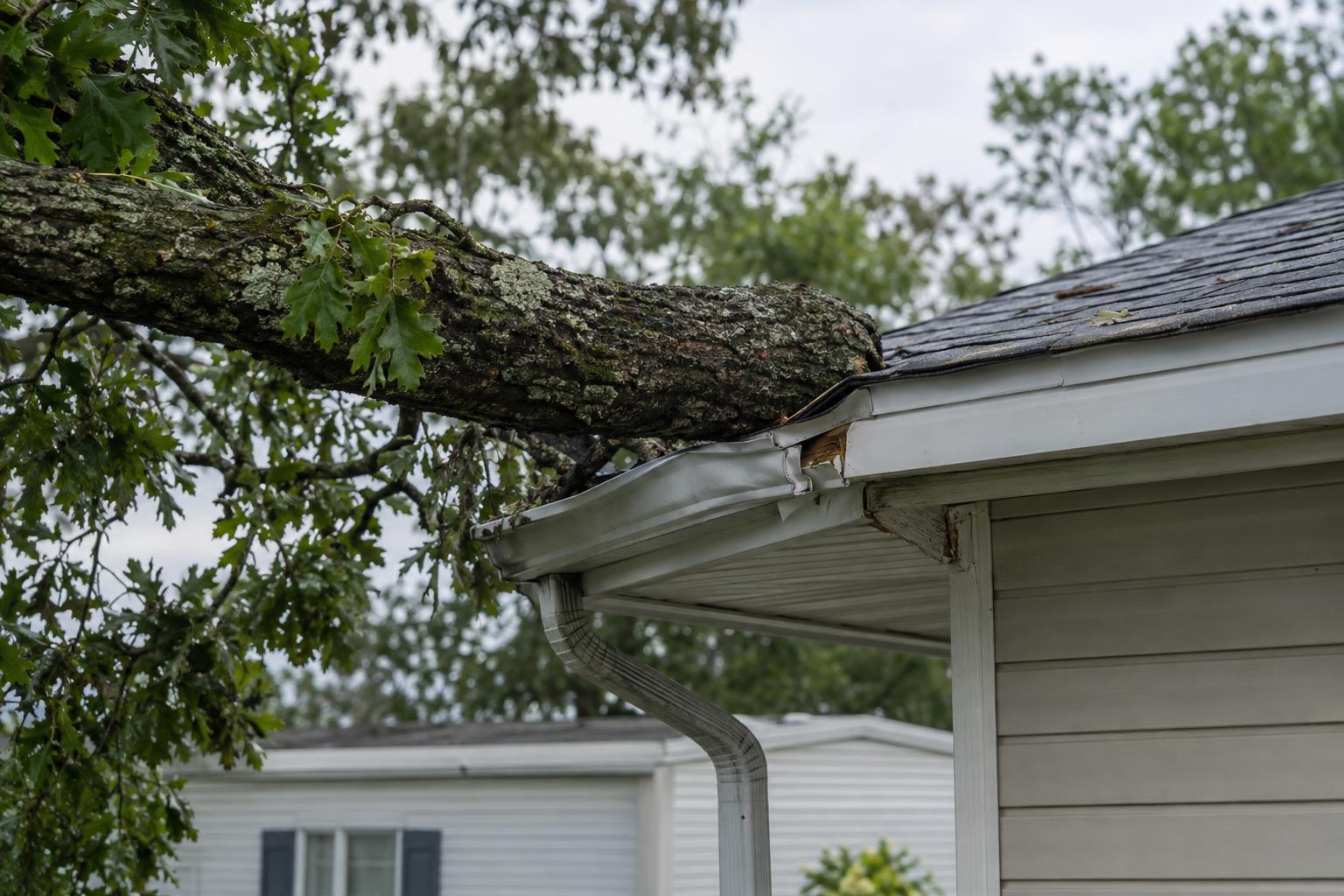
Damage from the tree itself is also different from damage caused by rain that later enters through an opening. If a branch punctures the roof and water damages a ceiling or belongings, the adjuster may examine both the initial impact and the resulting water damage. Keep the sequence clear in your notes and photos. Do not assume that every resulting repair is covered, or that one exclusion automatically decides the whole claim.
Damage to the home and damage to the tree are separate questions
The home’s roof, exterior wall, attached steps, awning, carport, or screened enclosure may be insured under different parts of a policy, or may have specific limits and construction requirements. Mobile and manufactured homes also have components such as skirting, tie-downs, roof-over structures, porches, and additions. A tree can damage one of these without damaging the main dwelling, so identify each affected part rather than describing the whole loss as “roof damage.”
The tree itself is usually considered separately from the insured structure. Coverage for removing a fallen tree can depend on where it landed, whether it damaged covered property, what caused it to fall, and any stated limit in the policy. A tree blocking a driveway or lying in the yard may not be treated the same as a tree that struck an insured building. Ask whether debris removal is included, whether a sublimit applies, and whether the insurer wants to inspect before removal.
There may also be practical limits on repairs to fencing, landscaping, a detached shed, or a neighboring structure. Make a list of each item that appears damaged and take photographs before moving debris where it is safe to do so. The insurer can tell you which items should be included in the claim and what estimates or inspections it needs.
Check the deductible before estimating what a claim may pay
A deductible is the amount the policyholder may have to pay toward a covered loss. Some policies use a flat dollar deductible for many claims, while windstorm or hurricane losses can have a separate deductible calculated under the contract. A percentage-based deductible may be based on an insured value shown in the policy rather than on the repair bill. The applicable wording and declarations page matter.
Do not estimate the claim payment by subtracting a general deductible from an early contractor quote. The insurer must first determine what damage is covered, what property and limits apply, whether depreciation or a valuation provision affects payment, and which deductible governs. If a storm is involved, ask the adjuster to show the applicable deductible and explain how it is calculated.
For a broader introduction to wind-related mobile-home claims, see Bassine’s wind damage claim steps for mobile homes. For roof-specific questions, the mobile home roof damage coverage guide covers documentation and policy review. These pages provide general education and do not replace the terms of an individual policy.
What if a neighbor’s tree fell on your home?
The location where a tree grew does not, by itself, establish who must pay. A healthy tree can fail during severe weather, while a tree with a documented hazard may raise different factual questions. Responsibility can depend on the tree’s condition before the fall, what the owner knew, the cause of the loss, and applicable law. Avoid assuming your neighbor is liable simply because the trunk was on their lot, and avoid promising to pay for a neighbor’s repairs before the insurers review the facts.
Report the damage to your own insurer and provide accurate information about where the tree stood, what you observed before the event, and what happened during the storm. If there is a dispute about responsibility, your insurer can explain the claims process and any recovery efforts it may pursue. Keep communications factual, preserve photographs and records, and do not remove evidence that the insurer has asked to inspect.
What to do after a tree falls
- Protect people first. Stay clear of unstable limbs, damaged roofs, leaning trees, and any downed or nearby electrical lines. Do not climb onto the roof or approach a tree touching a wire. Contact emergency services or the utility when there is an immediate hazard.
- Prevent further damage when safe. Ask the insurer what temporary measures are appropriate. Keep receipts for reasonable emergency work and photograph the condition before and after it. Do not attempt dangerous tree removal or make permanent repairs before the insurer has given instructions when an inspection is needed.
- Document the loss. Take wide and close photographs from safe locations. Record the date, approximate time, weather conditions, where the tree stood, what it struck, and which rooms or belongings were affected. Save contractor estimates and messages.
- Contact the insurer or agent promptly. Ask how to report the claim, whether an adjuster needs to inspect before debris removal, what deductible may apply, and whether tree removal has a separate limit. Request claim instructions in writing when possible.
- Keep a simple expense and contact log. Note whom you spoke with, when, the instructions received, and any temporary housing or repair expenses you are asked to track. Do not discard damaged property until the insurer says it can be removed, except when necessary to address an immediate safety or sanitation concern.
Mobile-home details worth documenting
Record the home’s make, model, year, roof type, and any additions that were present before the loss. Photograph the roof edge, roof-over, awning, carport, exterior wall, skirting, tie-down area, and any attached structure that appears affected. Include a few context images showing where the tree and home were in relation to one another, but do not enter a damaged area to take pictures.
If the home sits in a community or on leased land, there may be separate responsibilities for shared trees, roads, utility lines, or common areas. Notify the park or community manager about hazards and follow the lease or community emergency procedures. This does not determine insurance coverage, but it can help get a dangerous tree or blocked access addressed while the insurers review the loss.
After a claim, keep the insurer’s letters and estimates with your own records. If a contractor finds hidden damage after temporary work begins, photograph it before covering it when safe and notify the adjuster. If you disagree with a decision, ask for the specific policy provisions and claim facts considered, then follow the insurer’s review or complaint process. Florida DFS consumer information explains general insurance concepts, but it cannot decide a particular mobile-home claim.
Frequently asked questions about fallen tree damage
Does mobile home insurance cover a tree that falls on the roof?
It may, depending on the cause of the fall and the policy’s covered causes, exclusions, limits, and deductible. Report the loss and ask the insurer which provisions apply. The tree striking the roof does not, by itself, guarantee payment.
Will insurance pay to remove a tree from my yard?
Possibly, but tree-removal coverage may depend on whether the tree damaged insured property, blocked an access route, or meets a policy condition. It may also have a separate dollar limit. Ask the insurer before arranging non-emergency removal.
Does the neighbor pay if their tree falls on my mobile home?
Not automatically. Ownership of the tree alone does not establish fault. The cause of the fall, the tree’s prior condition, what the owner knew, and applicable law can matter. Start with your own insurer and preserve relevant evidence.
Should I wait for an adjuster before making repairs?
Address immediate safety needs and take reasonable steps to limit further damage, following insurer instructions when available. Photograph the condition first if it is safe. Ask whether the adjuster needs to inspect before debris removal or permanent repairs.
If a tree has damaged your Florida mobile or manufactured home, contact Bassine Insurance Agency at (239) 995-3515 to review your policy and discuss the claim questions to raise with your insurer. Bring the declarations page, photographs, and any adjuster or contractor notes so the discussion can focus on the wording and facts of your situation.