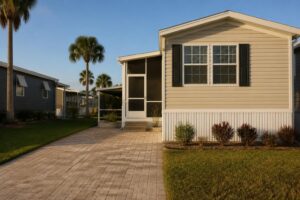
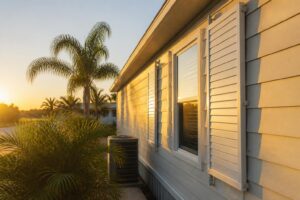
If you own a mobile home in Florida, preparing for hurricane season is not optional — it is essential. Every year, the Atlantic hurricane season runs from June 1 through November 30, and the weeks leading up to it are your best window to secure your property and review your insurance coverage. Whether your manufactured home sits in Bradenton, Sarasota, or Naples, the risks from high winds, flooding, and flying debris are real. Here is how to get your mobile home ready for hurricane season in Florida and make sure your insurance policy has you covered.
Why Mobile Homes Face Greater Hurricane Risk
Manufactured homes are built to HUD federal building standards, which differ from site-built home codes. While modern manufactured homes are far more resilient than older models, they still face unique vulnerabilities during hurricanes. Their lighter construction, elevated foundations, and roof profiles make them more susceptible to wind uplift and debris impact than concrete block homes.

Florida’s Building Code requires manufactured homes installed after 1994 to meet wind-zone ratings. Homes in Southwest Florida — including North Fort Myers, Bradenton, and Sarasota — fall within Wind Zone II or III, meaning they must withstand sustained winds of 100 to 110 mph. However, Category 3 or higher hurricanes can generate winds exceeding 130 mph, which is why insurance coverage is so critical.
Step-by-Step Storm Preparation Checklist
Start your hurricane prep at least 30 days before June 1. Waiting until a storm is in the forecast leaves too little time to address structural issues or adjust your insurance policy.
- Inspect tie-downs and anchoring systems — Ground anchors and over-the-top straps are your first line of defense. Have a licensed installer check them annually.
- Secure or remove awnings, carports, and skirting — Loose aluminum panels become dangerous projectiles in high winds.
- Trim trees and clear debris — Dead branches within 30 feet of your home can cause serious damage during a storm.
- Install hurricane shutters or plywood covers — Pre-cut plywood labeled for each window saves critical time when a storm approaches.
- Check your roof seals and caulking — Water intrusion causes more insurance claims than wind damage in many Florida counties.
- Elevate appliances and valuables — If your home is in a flood-prone area, raising HVAC units and storing documents above floor level reduces loss.

Review Your Mobile Home Insurance Before Storm Season
Your insurance policy is only as good as its coverage limits and exclusions. Before hurricane season begins, contact your agent to review these critical areas:
- Windstorm coverage — Confirm your policy covers wind damage. Some standard policies in coastal counties exclude windstorm, requiring a separate rider or a Citizens policy.
- Flood insurance — Standard manufactured home insurance does not cover flooding. If your home is in a FEMA-designated flood zone, you need a separate flood policy through the National Flood Insurance Program or a private flood carrier.
- Replacement cost vs. actual cash value — Replacement cost policies pay to rebuild at current prices. Actual cash value deducts depreciation, which can leave you significantly underinsured on an older manufactured home.
- Additional living expenses (ALE) — If your home is uninhabitable after a storm, ALE coverage pays for temporary housing, meals, and transportation.
What to Do When a Hurricane Warning Is Issued
When the National Hurricane Center issues a warning for your area, you typically have 24 to 36 hours to act. For mobile home residents, evacuation is almost always the safest choice. Most Florida counties issue mandatory evacuation orders for mobile home communities regardless of storm category.

Before you leave, document your property with photos and video. Walk through every room, open closets and cabinets, and record serial numbers of major appliances. This documentation is invaluable when filing an insurance claim after the storm. Store copies in the cloud or on a USB drive you take with you.
Filing a Claim After Storm Damage
If your mobile home sustains damage, contact your insurance company as soon as it is safe to return. Most carriers have 24-hour claims hotlines that activate during declared disasters. Here are the key steps:
- Document all damage with photos and video before making temporary repairs
- Make temporary repairs to prevent further damage — your policy requires you to mitigate additional loss
- Keep all receipts for emergency repairs, temporary housing, and meals
- Do not sign contracts with unlicensed contractors or public adjusters who show up uninvited
- File your claim promptly — Florida law gives insurers 90 days to investigate and 20 days to pay after determining coverage
Frequently Asked Questions
Does mobile home insurance cover hurricane damage in Florida?
Yes, most mobile home insurance policies in Florida include windstorm coverage, but flood damage requires a separate policy. Review your declarations page or call your agent to confirm what perils are covered under your specific policy.
When should I start preparing my manufactured home for hurricane season?
Start at least 30 days before June 1. This gives you time to schedule tie-down inspections, order materials, trim trees, and review your insurance coverage without the pressure of an approaching storm.
Are mobile home residents required to evacuate during hurricanes?
In most Florida counties, yes. Local emergency management agencies typically issue mandatory evacuation orders for manufactured home communities when a hurricane warning is in effect, regardless of the storm’s category.
How much does mobile home hurricane insurance cost in Florida?
Premiums vary based on your home’s age, location, wind zone, and coverage limits. Homes in coastal areas like Bradenton and Naples generally pay higher premiums than inland locations. Contact Bassine Insurance for a personalized quote.
Do not wait until a storm is in the forecast to check your coverage. Bassine Insurance Agency has been helping mobile home owners across Florida protect their homes since 2012. Call (239) 995-3515 today for a free mobile home insurance quote and make sure you are ready for whatever this hurricane season brings.